
July 26, 2018 (Shrawan 10, 2075 BS).
In Bhimdatta Municipality of Kanchanpur district, far-western Nepal, a bicycle was found abandoned. It belonged to a thirteen-year-old girl who never came home.
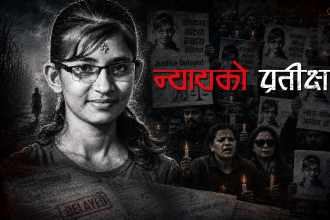
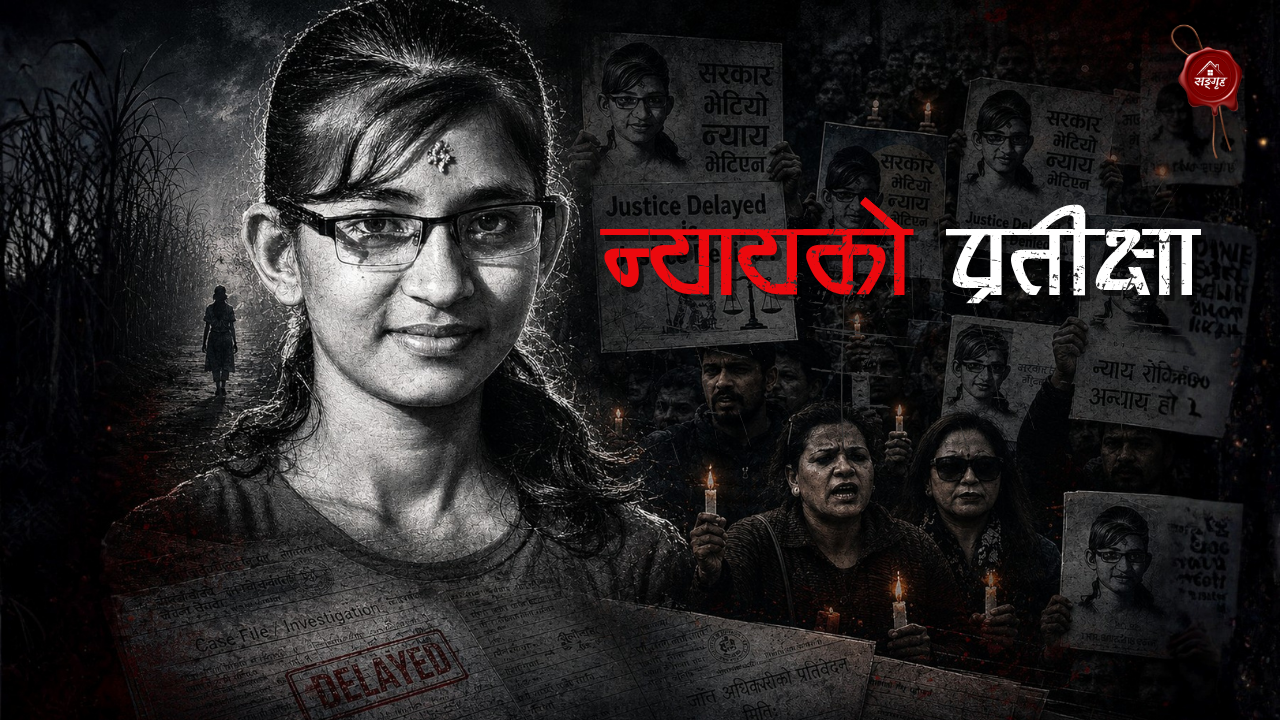
Seven years have passed. Justice has still not arrived.
This is not just the story of that girl. It is the story of Nepal’s justice system. It is the story of a mother’s unbreakable fight. And it is the story of a question that the government, the police, the judiciary, and all of us have failed to answer: who killed Nirmala Panta, and why has her killer still not been found?
For this article, we studied dozens of news sources, reports of the National Human Rights Commission, judicial documents, and detailed analyses of the case. The facts presented here have been cross-referenced across multiple sources. Wherever the facts contradict each other, that contradiction is clearly stated.

1. Nirmala: Who Was She?
An Extraordinary Daughter of an Ordinary Family
In Ward No. 2 of Bhimdatta Municipality, Kanchanpur, in a place called Ultakham, lived a lively girl studying in Grade 9. Her name was Nirmala Panta. She was thirteen years old.
Nirmala’s father, Yagya Raj Panta, was an ordinary farmer. Her mother, Durga Devi Panta, worked as an office assistant at Bhimdatta Municipality. The family was middle class; their dreams were big. Nirmala studied at Saraswati Secondary School in Bhimdatta and did well in her classes. According to neighbors, she was cheerful, friendly, and mixed easily with everyone.
School was closed that day in the monsoon month of Shrawan. Homework was pending. Nirmala decided to go to the house of her friend Roshani Bam. She took out her bicycle and told her mother: “I am going to my friend’s house to study. I will be back in a little while.”
That “little while” never came.
The Day of the Incident: July 26 and 27, 2018
According to a detailed report published by My Republica, on the morning of July 26 at around 11 a.m., Nirmala reached Roshani Bam’s house, about one and a half kilometers from her home. At around 3 p.m., she left to return home — but she never arrived.
As evening fell, Durga Devi’s heart began to pound. She asked neighbors, friends, and relatives. No one had any news of Nirmala. At around 8 p.m. that night, Durga Devi went to the local police post. Her plea was simple: “My daughter is missing. Please help me find her.”
The police response was inhuman: “Come back tomorrow morning.” (Sources: My Republica, Nagarik Daily, The Kathmandu Post)
The next morning, July 27, a local man named Deepak Negi spotted a bicycle in a sugarcane field in Nimbukheda, Bhimdatta-18. Near the bicycle, in the waterlogged field, lay the half-naked body of a teenage girl.
2. The Crime
The Crime Scene and the Initial Discovery
According to The Kathmandu Post, Nirmala’s body was found in a sugarcane field about 500 meters from Roshani Bam’s house. Even before the body was officially recovered, a crowd of locals had already gathered. They had taken photographs and posted them on social media. By the time the police arrived, the crime scene was no longer in its original state.
News of the discovery spread within minutes. It took the police more than half an hour to arrive. This delay raises serious questions about the protection of the crime scene.
The Post-Mortem Findings
The initial post-mortem confirmed that Nirmala had been raped and then murdered. There were clear signs of violence on her body. The preliminary assessment was death by strangulation. Based on the condition of the body, the nature of the injuries, and the evidence found in the sugarcane field, the police registered the case as a rape and murder.
One crucial detail: a vaginal swab sample was collected for DNA testing. This sample would later become the centerpiece of the entire case. According to the report of the National Human Rights Commission, there were serious errors in the very process of collecting the DNA sample: “Samples were collected in test tubes from three layers of the vaginal swab, but during the extraction process the quantity of DNA was insufficient and the sample may have been contaminated.”
The First Police Report Versus Reality
The initial police report claimed the investigation was being conducted systematically. The reality was different:
First: the crime scene was contaminated. With hundreds of locals gathered and the police arriving late, the scientific integrity of the crime scene had already been destroyed.
Second: CCTV footage disappeared. It was alleged that CCTV footage from near the crime scene was never collected, and that the footage later vanished. (Source: Nepal News, August 2025)
Third: Police Inspector Jagadish Bhatta was accused of not searching on the day of the incident. An inquiry committee led by AIG Dhiru Basnet noted that Inspector Bhatta had been found drinking beer while Nirmala’s family wept.
3. The Investigation
The First “Culprit”: Dilip Singh Bista and a False Confession
Twenty-four days after the incident, on August 20, 2018 (Bhadra 4, 2075 BS), the then Superintendent of Police Dilli Raj Bista publicly presented 41-year-old Dilip Singh Bista of Bhimdatta-19, Ultakham, as the main accused. The police claimed he had confessed to the crime multiple times.
But the local community refused to accept this. Their position was clear: Dilip Singh Bista was a mentally vulnerable man, and his confession had been extracted by force. Nirmala’s father even claimed that the police had pressured the family itself into filing a complaint against Dilip.
August 24, 2018 (Bhadra 8): the shooting. Police opened fire on local protesters who had taken to the streets. A young protester named Sani Khuna was killed. Twenty-year-old Arjun Bhandara was wounded by gunfire.
On September 28, 2018 (Asoj 12), the DNA results came back: Dilip Singh Bista’s DNA did not match the sample taken from Nirmala’s body. He was released.
The DNA Controversy: A Test of Nepal’s Forensic System
This case raised profound questions about Nepal’s forensic capacity. According to a detailed analysis published by The Kathmandu Post:
What happened with the DNA testing?
- More than 124 people underwent DNA testing.
- More than 1,000 people were questioned.
- Yet no one’s DNA matched the sample collected from Nirmala’s body.
The conclusion of the National Human Rights Commission: there were serious errors in the DNA sample collection process. The sample was insufficient and damaged. There were flaws in the scientific method of the DNA testing itself. The Commission recommended that investigators focus on evidence other than DNA.
Another technical committee, led by Jeevan Rijal, also concluded that the “male component” found in the sample taken from the victim’s body may have been the result of contamination, or may not have belonged to the perpetrator at all. The validity of the laboratory report claiming sperm had been found was itself called into question.
People confirmed to have undergone DNA testing:
- Dilip Singh Bista (main accused; DNA did not match)
- SP Dilli Raj Bista, the then District Police Chief (DNA did not match)
- Kiran Bista, son of SP Dilli Raj (DNA did not match)
- Aayush Bista, nephew of Bhimdatta Mayor Surendra Bista (DNA did not match)
- Pradip Rawal and Bishal Chaudhary (arrested later; DNA did not match; released)
This list reveals a tragic paradox: the situation deteriorated so far that even police officials had to be DNA tested — yet the perpetrator was never found.
The Second Phase: Pradip Rawal and Bishal Chaudhary
In late 2018 (Mangsir 2075), the Central Investigation Bureau arrested Nirmala’s neighbor Pradip Rawal in Kathmandu. His friend Bishal Chaudhary was also called in for questioning. According to police sources, IGP Sarbendra Khanal and CIB chief DIG Niraj Bahadur Shahi personally interrogated them. Both were claimed to have confessed. But once again, the DNA did not match. Both were released. They alleged they had been tortured by the police. The police denied the allegation.
Political Interference and the Protection of the “Powerful”
This is the most sensitive aspect of the case. What follows is based on allegations and inquiry committee reports — these are not established facts.
The allegations:
- The then SP Dilli Raj Bista was accused of turning Dilip Bista into a scapegoat to shield the real perpetrator.
- Khem Bhandari, the publisher and editor of a local newspaper who played a key role in redirecting public suspicion from Dilip Bista toward the Bam sisters, was later revealed to be a relative of SP Dilli Raj.
- Whistleblower police officers stated that pressure had come “from above” to protect an “influential person.”
- Birendra KC, a member of one investigation committee, resigned after receiving threats from a group trying to weaken the investigation.
The crucial unanswered question: why did Kiran Bista, the son of SP Dilli Raj, and Aayush Bista, the nephew of Mayor Surendra Bista, end up on the DNA testing list at all? To this day, there has been no satisfactory public answer.
The Suspended Officers and What Became of Them
Officers suspended by the Home Ministry:
- SP Dilli Raj Bista (accused of mishandling the case; later released on bail by the court)
- DSP Gyan Bahadur Sethi and DSP Angur GC (CIB team leaders)
- Inspectors Ekendra Khadka and Jagadish Bhatta
- ASI Ram Singh Dhami
Later, in March 2019, the District Government Attorney’s Office filed a legal case against these officers at the Kanchanpur District Court, on charges of torturing Dilip Bista and destroying evidence.
4. The Movement
How It Began: A Mother’s Voice
Protests began in Kanchanpur the very day after the body was found. But it did not take long for the movement to become national. The allegation that the police had used Dilip Bista as a scapegoat, combined with the killing of young protester Sani Khuna by police gunfire on August 24, set off an explosion of public anger.
Durga Devi Panta staged a sit-in outside the District Administration Office for months on end, demanding justice for her daughter. Yagya Raj Panta, who later suffered from mental health problems, traveled 35 hours by bus to Kathmandu in an attempt to reach Prime Minister KP Sharma Oli.
#JusticeForNirmala: The Power of Social Media
The hashtags #JusticeForNirmala and #NirmalaJustice went viral. The movement was joined not only within Nepal but also by the Nepali diaspora abroad. Thousands of posts were shared on Twitter, Facebook, and Instagram.
According to an analysis published by The Diplomat, activists pasted new posters next to government ones reading “Justice delayed is justice denied” — a symbolic act that showed the depth of the movement.
Government Promises, and How They Were Broken
According to an August 2025 report by Nepal News, since 2018 the following Home Ministers have all promised to “deliver justice”:
- Ram Bahadur Thapa “Badal”
- Bal Krishna Khand
- Narayan Kaji Shrestha
- Rabi Lamichhane
- Ramesh Lekhak
The most recent development: in March 2026 (Chaitra 11, 2082 BS), IGP Dan Bahadur Karki formed a 15-member study committee led by SSP Krishna Pangeni. The committee includes forensic experts, CID officers, and police laboratory staff. (Source: Ekantipur)
But what does Durga Devi say? According to a late-2025 report by Ekantipur, 42-year-old Durga Devi no longer wishes to talk about her daughter. “Seven years of running around and disappointment have exhausted me.” For the past two years, no investigation team has visited her home.
5. The Unanswered Questions
Findings of Independent Journalists and Researchers
What follows is based on journalistic investigations and questions raised in the public sphere. None of it has been proven in court.
Questions asked by independent outlets such as The Record Nepal:
- Why did the then SP Dilli Raj Bista have to submit his own son Kiran for DNA testing?
- Why was a DNA test of the mayor’s nephew considered necessary?
- Why was the fact that a local journalist — the one who redirected suspicion toward the Bam sisters — was a relative of SP Dilli Raj kept hidden?
The Record Nepal’s investigative report acknowledged: “To date, no concrete forensic evidence has emerged implicating SP Bista, his son, or the Bam sisters.” But the question was never satisfactorily addressed in public.
The Silence of the Witnesses
According to multiple sources, Roshani Bam was the last known person to see Nirmala. She and her elder sister Babita Bam were arrested and later released. Citing contradictions in Roshani Bam’s statements, Nirmala’s mother Durga Devi expressed suspicion toward the Bam sisters.
Threats Against Nirmala’s Family
When investigation committee member Birendra KC resigned, he cited “threats from a group trying to weaken the investigation.” Various media reports also note that the family received pressure and threats at different times.
6. The Media
After the incident, the national media gave the case extensive coverage. The Kathmandu Post, Ekantipur, Nagarik Daily, The Himalayan Times, and online portals reported on it in detail.
But it was the deep investigative journalism of independent outlets like The Record Nepal that brought many new details to light. BBC Nepali also gave the case international coverage.
One troubling question remains: why did some reports get published and then fall silent? Particularly after the names of “powerful people” surfaced, several investigative threads were never pursued further.
International Attention
In December 2018, The Diplomat published a detailed analysis under the title “The Rape Case That Shook Nepal.” The article raised broader issues about Nepal’s justice system and the safety of women.
7. Durga Devi: A Mother’s Seven-Year Fight
According to a detailed Ekantipur report, 42-year-old Durga Devi Panta still works as an office assistant at Bhimdatta Municipality. But for seven years, her life has been focused on a single goal: justice for her daughter.
Yagya Raj Panta, Nirmala’s father, later suffered from mental health problems and had to be treated at a hospital in Kathmandu.
In an interview with Ratopati, Durga Devi said: “Only I know what I have endured. Now even hope is gone.”
In another interview with My Republica, she had once said: “If tomorrow they jail my daughter’s killer and the criminal is bound in chains, I will find my courage again.” But today she is exhausted. She no longer invites strangers into her home.
8. The Systemic Failures
The State of Nepal’s Forensic Capacity
This case exposed the serious limits of Nepal’s forensic science system. Errors in DNA sample collection and testing obstructed the judicial process itself. The National Human Rights Commission acknowledged this weakness.
The question arises: how systematic are Nepal’s training and procedures for protecting a crime scene until police arrive? How rigorous are its DNA collection standards? This case gave its answer: not rigorous enough.
Police Accountability and Political Interference
Nine district police chiefs have come and gone since the case began. That number alone shows how fleeting and person-centered accountability is. Each new police chief promised a “fresh start” — but where did the continuity go?
The State of Justice for Women in Rural Nepal
According to The Diplomat’s analysis, this case demonstrated how fragile the safety of women and girls in Nepal really is. The Godamchaur rape case of November 2017 is another notable example, in which the Lalitpur District Court released the accused — identified by the victim herself — for lack of evidence, and there too the DNA did not match.
Did the Law Change?
After Nirmala’s death, some changes were made to laws against violence toward women. But whether the judicial process, forensic capacity, and police accountability have genuinely improved remains a question without a satisfactory answer.
9. The Buried Stories
Contradictions That Were Never Resolved
First contradiction: the police declared Dilip Bista guilty on the basis of a confession, but the DNA did not match. How was that confession obtained? Was there torture? The police denied it, but no independent investigation was ever conducted.
Second contradiction: the CCTV footage is said to have disappeared. Who removed it? How far did the investigation into this go?
Third contradiction: Nirmala’s mother claimed Roshani Bam’s statements were contradictory. Did the courts and police ever take this seriously?
Fourth contradiction: Khem Bhandari, a relative of SP Dilli Raj Bista, redirected public suspicion toward the Bam sisters. Was that a coincidence, or a deliberate act?
Stories That Were Reported Once and Then Vanished
- A report once surfaced that a local journalist had been threatened — but the matter was never investigated further.
- An investigation committee member mentioned “threats” when he resigned. But from whom did those threats come? No one ever followed up.
10. Our Perspective
What Does This Case Mean?
In seven years:
- More than 124 people DNA tested
- More than 1,000 people questioned
- Nine district police chiefs replaced
- Five Home Ministers made promises
- At least seven investigation committees formed
- An innocent, mentally vulnerable man turned into a scapegoat
- A young protester killed by police gunfire
And still, no justice.
Questions for the Government, the Police, and the Judiciary
To the government: why did the promises of five Home Ministers ring hollow? Where did the political will go? Why has forensic capacity not improved in seven years?
To the police: why was the crime scene not protected? Why were there errors in DNA sample collection? Where did the CCTV footage go? Whistleblower officers spoke of “pressure from above” — from whom?
To the judiciary: cases were filed over the destruction of evidence — what became of them? Where did accountability go?
To the media: why were certain investigations shelved once the names of the “powerful” came up?
To society: Sani Khuna died from a police bullet on August 24, 2018. Justice never came for him either. Have we already forgotten him?
To this day, the perpetrator has not been found. Durga Devi is still waiting. Silence surrounds her. And Nepal has been searching for an answer for seven years.
Timeline
| Date | Event |
|---|---|
| July 26, 2018 | Nirmala Panta goes to a friend’s house to study; never returns |
| July 27, 2018 | Nirmala’s body found in a sugarcane field (raped and murdered) |
| Late July 2018 | Local police begin investigation; CIB team (led by DSP Angur GC) arrives |
| August 20, 2018 | SP Dilli Raj Bista publicly presents Dilip Singh Bista as the main accused |
| August 23, 2018 | SP Dilli Raj Bista and CDO Kumar Bahadur Khadka transferred; high-level inquiry committee formed |
| August 24, 2018 | Protester Sani Khuna killed by police gunfire; dozens injured in protests |
| August 25, 2018 | DSP Gyan Bahadur Sethi, DSP Angur GC, Inspectors Ekendra Khadka and Jagadish Bhatta, ASI Ram Singh Dhami suspended |
| August 26, 2018 | Roshani Bam and her sister Babita Bam arrested |
| September 17, 2018 | New 9-member inquiry committee formed under DIG Dhiru Basnet |
| September 27, 2018 | Prime Minister KP Oli says “local police botched the investigation” |
| September 28, 2018 | Dilip Singh Bista released after his DNA fails to match |
| September 29, 2018 | Roshani and Babita Bam also released after DNA mismatch |
| November–December 2018 | Pradip Rawal and Bishal Chaudhary arrested; released after DNA mismatch |
| December 2018 | Durga Devi Panta files an FIR against 8 police officers |
| February–March 2019 | The officers appear in court; released on bail. SP Dilli Raj Bista released on NPR 1.5 million bail. Inspector Jagadish Bhatta and SP Dilli Raj Bista dismissed from service |
| Mid-2019 | Number of people DNA tested reaches 124; questioning continues |
| July–August 2025 | Home Minister Ramesh Lekhak directs the CIB to open a fresh investigation |
| November–December 2025 | 7-member special committee formed under AIG Deepak Thapa |
| March 2026 | IGP Dan Bahadur Karki forms a 15-member study committee under SSP Krishna Pangeni |
| June 2026 | The case remains unsolved; the perpetrator unknown |
Sources
- Nepal News: “Seven Years of Silence: The Unfinished Story of Nirmala Panta’s Search for Justice”
- The Kathmandu Post: “Everything you should know about the rape and murder of Nirmala Pant”
- The Record Nepal: “The hunt for Nirmala Panta’s killer”
- Ekantipur: “Nirmala murder case: Investigation still incomplete even after 7 years”
- My Republica: “Police initiate fresh investigation into Nirmala Panta rape and murder case”
- The Himalayan Times: “Two years on, delayed justice disappoints Nirmala Panta’s mother”
- The Diplomat: “The Rape Case That Shook Nepal”
- Rising Nepal Daily: “CIB investigating Nirmala Pant’s case from a new angle”
- My Republica: “I’ll become a different person if justice prevails: Durga Devi”
This article is based on Sangriha’s independent research. The facts presented here have been collected and cross-referenced from publicly available sources. Wherever facts are contradictory or remain mere allegations, this is clearly stated. This is an English translation of our original Nepali report.